
From foundry patterns to production tooling, Stratum's large-format pellet extrusion systems are engineered to print moulds and patterns at a scale, speed, and material cost that traditional subtractive machining can't match.
Request QuoteA look at the range of tooling geometries our machines are built to produce. Images below are temporary placeholders pending final gallery photography.
Large-format, single-piece pattern for sand casting, printed in one continuous run instead of machined from a billet.
High-temperature tooling for composite lay-up, built with a smooth, dimensionally stable surface.
Rapid-turnaround forming tools sized for production runs, at a fraction of traditional tooling lead time.
Sacrificial and reusable patterns for investment casting, tuned to the material's burnout behavior.
Production-floor jigs and fixtures printed to exact part geometry, replacing slow custom fabrication.
Multi-meter mould sections that would otherwise require a machining bed far larger than most shops have.
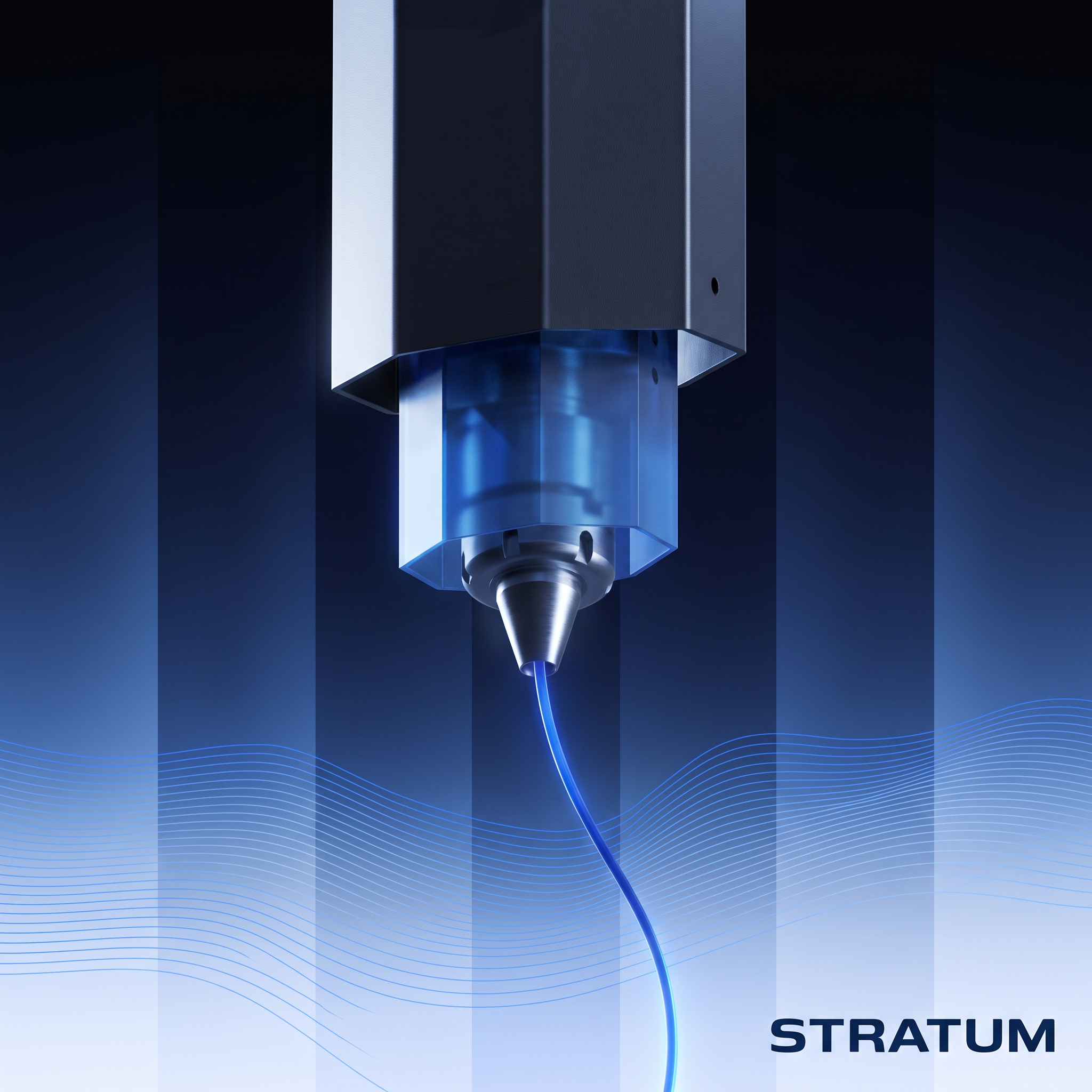
Moulds and patterns are exactly the kind of part additive manufacturing was slow to solve: large, often single-use, and expensive to machine from solid stock. Stratum's pellet extrusion systems address this directly with a large-format build volume, high-flow extrusion heads, and a rigid gantry designed to hold accuracy across meter-scale parts.
Because our machines print directly from raw pellets rather than filament, tooling can be produced in a wide range of engineering thermoplastics — including reinforced and high-temperature grades suited to composite lay-up, thermoforming, and casting patterns — at a material cost and lead time that machining or filament printing can't reach at this scale.
Talk to our team about your tooling geometry, material requirements, and lead time — we'll help you scope the right machine for the job.
Request Quote